

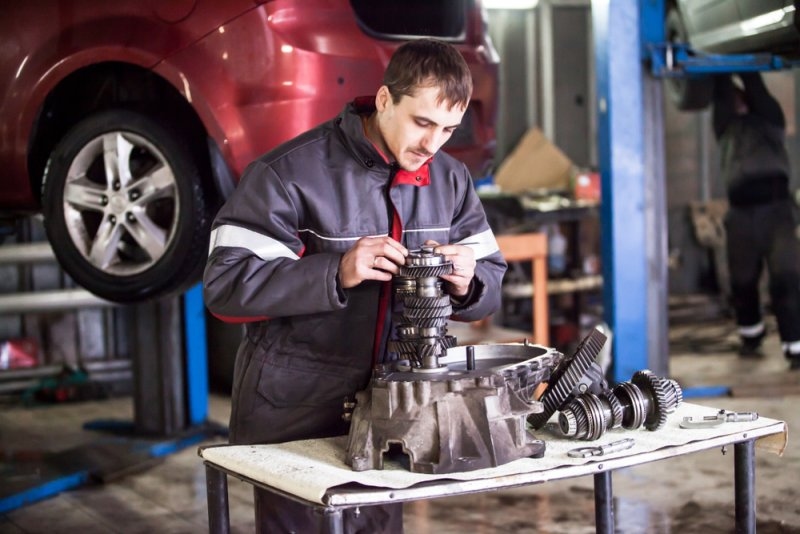
Transmission maintenance is also quite important to provide effective shifting in addition to reliable operation. Transmission service and transmission fluid change are the best ways to safeguard internal parts from damage that might be due to circumstances that are not unavoidable.
In addition, having a clear understanding of when to notice transmission issues and having a transmission maintenance schedule can be an excellent method of catching issues early on.
There's more to transmission maintenance than changing the fluid. For some vehicles, it can include fluid condition and level inspection, leak checks, component inspections, and even how the transmission shifts in normal driving.
Driving habits can influence transmission maintenance as well. If you're regularly pulling a trailer or hauling a heavy load, driving on hilly roads, experiencing high or low temperatures, or running in stop-and-go traffic, you may need to adhere to your manufacturer's severe-service schedule.
Transmission fluid lubricates the moving parts in a transmission, dissipates heat, and assists in smooth gear shifts. As time goes on, the fluid is prone to get dirty or to lose some of its coating qualities, so a transmission fluid change on schedule can keep the transmission running smoothly.
Not all fluid changes are equal. Some transmissions may go longer than others, and there will always be some that need additional fluid services. Make sure you consult your owner's manual prior to scheduling a transmission fluid change if your vehicle tows or sees demanding conditions.
Certain transmission problems don't go away over time and are not always immediately noticeable. Recognizing the early signs of transmission problems can allow you to schedule a repair before a minor problem causes further damage.
Watch for these common warning signs:
This doesn't necessarily mean the transmission is no longer working; these symptoms can be caused by other issues. Sensors, electronic controls, fluid levels, mounts, and other drivetrain pieces can give you the same symptoms. A professional transmission service will help figure out what's actually going on.
Use the proper fluid, and follow the service intervals specified by the vehicle manufacturer. Transmission oils are not always cross-compatible, and this can have some influence on the fluid's ability to lubricate and shift.
Hunting under your vehicle from time to time to see if there's any leaking is helpful as well. Even a minor leak over time will deplete the fluid and put more strain on internal parts. Pay close attention to shifting, noises, and feelings while driving as well.
Transmission service schedules should be indicated mostly by the manufacturer of your car. Your vehicle's handbook may tell you that you need to change or flush your fluid or that you need to have some parts of your transmission serviced.
Your driving habits might even impact the schedule. Think of these potential car maintenance tips:
Recording the history of the prior transmission service also allows for easier tracking of when certain inspections and fluid maintenance would be required. Follow the severe-driving schedule shown by the manufacturer when it pertains to your vehicle, if listed.
The details of the transmission service will depend on your vehicle and which service you choose. A technician may examine for fluid leaks, examine fluid condition and level, look for diagnostic codes, and check how the transmission shifts.
Replacing the fluid and filter is a service sometimes included, while other types of flushes require extra steps, such as checking, testing, or retuning your transmission. Not all types of flush service are suitable for all vehicles. Inquire with your service tech about what's right for your transmission.
Ignoring the symptoms of an early transmission leak can turn into a bigger problem... If a tiny leak in the fluid is not repaired, the transmission may run lower and lower on fluid. As the fluid gets thinner, heat and wear could accelerate.
It will make catching these car problems easier. You don't have to wait until your transmission begins to shift really badly when you keep up with your transmission on a daily basis. Using a transmission maintenance schedule allows you to plan for a service appointment and have inspections done, which is easier to budget for and will keep your vehicle reliable.
Transmission maintenance is yet another service to make sure your vehicle's drivetrain is ready to go through day-to-day driving, whether it's for protection or in accordance with your best transmission maintenance schedule, transmission service schedule, and transmission fluid change schedule.
Knowing the warning signs of transmission problems, as well as how to maintain a transmission, can also save you money in the long run.
Age, moisture, debris, and fluctuating temperatures can cause transmission fluid to go bad, which is why it's recommended to follow your manufacturer's recommended intervals for time-based and mileage-based maintenance.
Yes, regular shifting does not always imply the transmission is in tip-top shape; we would catch leaking fluid, broken-down fluid, other wear items, or signs of something early.
It could affect the efficiency of the driveline if there is not enough fluid, as it could lead to increased friction and hinder normal operation. Vehicle fuel economy is also affected by other factors such as tire pressure, driving style, vehicle load, engine condition, and road conditions.
Yes. As the methods of construction for automatic transmissions are different from those of manual transmission cars, the inspection points and service intervals may differ. Clutch checking in the case of a manual vehicle is also independent of the transmission.
Loving your big or little car. Most modern cars do not need a lengthy warm-up time. Once you have started your car, gently driving it around for the first few minutes will give your transmission fluid and all other components time to get to normal temperature without idling for too long.
This content was created by AI